The great explorer of the truth, the master-builder of human happiness no one rejects dislikes avoids pleasure itself because it is pleasure but because know who do not those how to pursue pleasures rationally encounter consequences that are extremely painful desires to obtain.
Read MoreCapital Campaign Case Study | Webster University
- Home
- Case Studies
- Capital Campaign Case Study | Webster University
Background
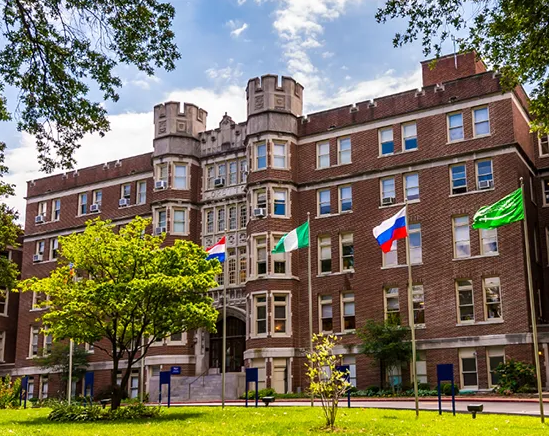
Webster University was founded in 1915 by the Sisters of Loretto as Loretto College, a Catholic women’s college, one of the first west of the Mississippi River. In 1962 it became Webster University and in 1967, grew into a secular coed institution with emphasis on providing a high quality, Liberal Arts education.
The tradition of recruiting students who want to apply their talents to serve others continues in the Catholic tradition inspired by the Sisters of Loretto. The Foundation of Webster University’s legacy is defined by innovation in higher education. When elite universities were restricting access to a college degree, Webster was increasing access by opening new campuses on military bases. When public universities were cutting arts degrees, Webster was busy creating one of the premier arts programs in the country. When hundreds of U.S. colleges were closing, Webster was expanding its global campuses to reach three continents.
The tradition of recruiting students who want to apply their talents to serve others continues in the Catholic tradition inspired by the Sisters of Loretto. The Foundation of Webster University’s legacy is defined by innovation in higher education. When elite universities were restricting access to a college degree, Webster was increasing access by opening new campuses on military bases. When public universities were cutting arts degrees, Webster was busy creating one of the premier arts programs in the country. When hundreds of U.S. colleges were closing, Webster was expanding its global campuses to reach three continents.
Vision
Recognizing that for a university to survive, let alone thrive, it must create a “Regenerative Community” that not only contributes financially, but partners fully with Students, Alumni, Friends, Corporations, and Foundations, the vision was to develop internal capacity to build transformational relationships that would help the students and the university thrive in challenging times, continuing the legacy of educating students who “Make A World of Difference.”
Challenges
While Webster University has dedicated faculty who care deeply about mentoring student success, the steady decline in enrollment and growing criticism of higher education costs by students and family had resulted in a steady decline in both enrollment and revenue. In addition, educational benefits for Military personnel to attend college had significantly decreased over the past decade, causing the university to operate in the “Red” for the past five years.
A situation that would call for increased relationship building for philanthropic investment saw an Advancement Office that lacked campaign fundraising experience and institutional leadership that didn’t define a visionary platform to rally said relationships around.
A situation that would call for increased relationship building for philanthropic investment saw an Advancement Office that lacked campaign fundraising experience and institutional leadership that didn’t define a visionary platform to rally said relationships around.

The Plan
The Board of Governors of Webster University recruited a new President, Dr. Tim Keane, who worked with the campus to develop a Kairos Strategic Plan. Knowing that fundraising campaigns are truly tools to accomplish visionary plans, President Keane hired DickersonBakker to do a 360 Assessment of his relationship building operations in Advancement, while at the same time helping the campus to develop thematic pillars that articulate a new vision and direction for the university, without losing the core DNA that makes the culture and purpose exceptional. The thematic pillars of this new vision would evolve into campaign fundraising priorities that carry emphasis on everything Webster can become and what a Webster education can truly be.
The Campaign
DickersonBakker conducted on-site audits and analysis of the Advancement Office, along with facilitating campus visioning dialogues that developed two powerful reports. The first was an analysis of the gaps and opportunities in the Advancement operations and the second was the formation of institutional pillars that could be tested as campaign priorities in a Campaign Feasibility Study Prospectus Case for Support. This fiscal review and institutional strategies moved the financial operations of the institution from operating in the “Red” at a loss to a balanced positive budget of operating in the “Black” the last two fiscal years.
A thorough Campaign Feasibility Study was then conducted to test the Prospective Case for Support, identify potential volunteers, giving capacity, and passion for supporting the priorities through lead gifts. The study found that Webster University could conduct a campaign of $100 Million+ and that they should engage in launching the campaign as soon as possible.
A thorough Campaign Feasibility Study was then conducted to test the Prospective Case for Support, identify potential volunteers, giving capacity, and passion for supporting the priorities through lead gifts. The study found that Webster University could conduct a campaign of $100 Million+ and that they should engage in launching the campaign as soon as possible.
Outcomes
Webster University is currently in the Nucleus Phase of a $100 Million comprehensive three-year campaign with DickersonBakker serving as Campaign Counsel.
The Webster Thrive campaign focuses on four priorities that when funded together can do one thing: make Webster’s next century as distinctive as its last.
1. Guarantee Student Thriving, 2. Transform Higher Ed, 3. Inspire Lifelong Learning, 4. Reinvent the Flagship Campus